The First Session Is a Visit, Not a Verdict
A first sports session can feel easier when you set one modest aim, observe how the club works and decide afterwards what you would like to try again.
You have found a local club, checked where it meets and nearly sent the message asking if you can join in. The question underneath that message is often simpler: what if I am not good enough, do not know anyone or cannot keep up? Treating a first sports session as a visit, rather than a verdict on your ability, gives you room to answer that question through experience.
Imagine that Sam, an invented beginner, has been curious about a community badminton group advertised at a leisure centre. Sam has played casually with family but has not joined a club, and worries about arriving without knowing the rules or the other players. The situation is ordinary enough to be useful: the aim is not to transform Sam into a confident competitor in one evening, but to make trying the session manageable and leave with a considered next choice.
A modest aim
Before contacting the club, Sam chooses one modest aim: understand how beginners are included in the session. That aim is more useful than deciding to prove fitness, win a game or make a friend immediately. It gives Sam something specific to notice without turning every rally into a judgement.
A first-session aim can be as small as learning where to check in, asking how players are grouped, or joining one activity with the coach’s guidance. Choose something that depends mainly on your own actions. “Ask what happens after warm-up” is within your control; “feel completely at ease” is not, because comfort may take time and depends on the setting.
Sam writes down a short question to ask on arrival: “Is this group suitable for someone returning to badminton?” That question gives the organiser a chance to explain the format and gives Sam a clear opening conversation. It is not a test of whether Sam deserves to attend; it is a way to find out whether the session fits.
Before going, Sam sends a brief message asking whether visitors should bring a racket and whether there is anything to know about the session. A club may lend equipment, or it may expect players to bring their own; asking prevents a practical uncertainty from becoming a reason to stay home. If the club has a code of conduct, welcome information or joining notes, reading them can also clarify how newcomers are expected to take part.
Arriving with context
Sam plans the journey to the leisure centre and allows time to find the sports hall and speak to the organiser. The point is not to arrive with an elaborate preparation routine. It is to avoid beginning the visit already flustered by searching for an entrance or wondering whom to approach.
At reception, Sam asks for directions to the badminton group, then introduces themself to the person organising the session. The organiser explains that players warm up together, then rotate through short games, with beginners able to ask for a slower introduction. That answer gives Sam a first picture of the evening: there is structure, but there is also a way to join at a suitable pace.
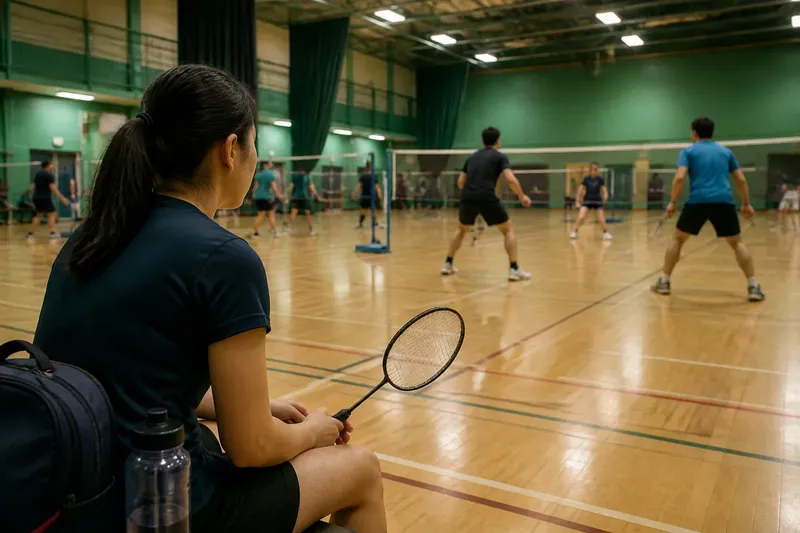
A useful first visit includes observation as well as participation. Sam watches how the organiser explains rotations, how players wait between games and whether people make space for newcomers. These details help explain the club’s habits better than a single score would. They also make it easier to know what to do next without expecting to understand every convention straight away.
Observation does not mean standing on the edge for the whole session if you would rather try an activity. Sam takes part in the warm-up and watches one rotation before joining a game. That choice keeps the visit active while leaving a little space to understand how players move between courts and how the group communicates.
Reading the format
Each sport and club has its own rhythm. A badminton session might use rotating partners; a running group might set several paces; a beginners’ swim session may have its own lane arrangements. The useful question is not whether the format looks exactly as you expected, but whether someone explains what to do and how to ask for help.
Sam notices that players call the score before serving and that the organiser helps sort out a close line call. Sam does not need to memorise every rule before joining. Instead, they ask one practical question about scoring, then follow the organiser’s guidance. A first visit is a reasonable place to learn the local version of familiar routines.
It helps to distinguish a new skill from a poor fit. Being unsure how to rotate partners is a learnable detail. Feeling pressured to play through discomfort, or being dismissed when asking a basic question, points to a different concern. Sam can take time to tell these apart rather than treating every awkward moment as evidence that the sport is not for them.
For Sam, one rally feels clumsy, but the organiser offers a simple cue about position and lets Sam try again. The next rally is easier to follow, even though Sam still misses shots. The observable result is modest: Sam understands where to stand and feels able to stay in the game. That is meaningful information about the session without pretending that one evening settles what Sam can become.
When the nerves rise
New settings can bring nerves even when the group is welcoming. Sam feels self-conscious after missing a serve and briefly considers leaving. Rather than demanding instant confidence, Sam returns to the original aim: learn how beginners are included. The organiser’s invitation to take another turn helps Sam continue, but Sam also knows leaving early would be a valid choice if the session felt uncomfortable or unsuitable.
A small pause can help you make a deliberate decision. Get a drink, check where your belongings are and ask the organiser what remains in the session. You do not owe anyone a full evening simply because you arrived, and you do not have to interpret an uncomfortable moment before you have had time to think.
Supportive participation is not the same as constant encouragement or easy success. A useful sign can be quieter: the instructions are understandable, questions receive a straightforward answer, and players can take part without being mocked for learning. Sam notices these things, alongside the parts that still feel unfamiliar.
One boundary matters: follow the club’s and venue’s stated guidance, including any relevant equipment or participation requirements, and ask the organiser if you are unsure about them. For a health concern or an injury that could affect participation, seek advice from an appropriate qualified professional rather than relying on a club visit to settle it.
Questions after a session?
What should I bring to a first sports session?
Ask the organiser what equipment is needed and whether the club can lend anything. Wear clothing and footwear suited to the activity and venue, and bring water if that is appropriate for the session.
Do I need to know the rules before I go?
You usually do not need to know every rule to attend a beginner-friendly session, but it is sensible to ask what level or format the club expects. Tell the organiser what you have and have not done before, then ask for an explanation when a rule affects your turn.
What if everyone else seems more experienced?
Notice how the group responds to newcomers rather than comparing your first attempts with other people’s settled routines. You can ask whether there is a beginner group, a slower option or a suitable session for someone returning to the sport.
How do I decide whether to return?
Afterwards, write down what felt welcoming, what was confusing and what you would like to try next time. Consider whether the format and people seem compatible with your needs; you can ask a follow-up question before deciding to attend again.
A decision after
When the session ends, Sam does not ask, “Was I good?” Instead, Sam considers three observations: the organiser explained the rotation, a beginner could ask questions, and the pace was challenging but manageable. Sam also notes that remembering the score made the first game harder to follow. These details make the choice more useful than an overall label such as success or failure.
Sam asks the organiser whether the group has a session with more time for beginners. The organiser explains the options and suggests which one may suit someone still learning the routine. Sam leaves with a practical next step, not an obligation to join. If no option fits, Sam can look for another local club or try a different activity.
Say you are trying a beginners’ running group instead. Your modest aim might be to learn how the group handles different paces. You could notice whether leaders explain the route and whether the group has a way to keep people from being left uncertain; after the session, you can decide whether that arrangement suits you. The same approach works without assuming that every sport needs the same measure of comfort or progress.
Keep your notes brief and concrete. “I knew who to ask when I arrived” gives you something to compare with another visit; “I was awkward” turns a temporary feeling into a verdict. If you return, choose one new aim, such as following the warm-up more confidently or asking to practise a particular skill. There is no need to solve every uncertainty in one evening.
A first sports session is useful even if you decide not to return: it can show you what kind of instruction, pace and welcome you need from a club. For your first sports session, let the main search be for fit, not proof of ability. You can leave with one clear next question, a reason to try again, or enough information to choose somewhere else.