Solo Drills or a Practice Partner? Choose by the Skill
Solo drills or a practice partner? Match the format to the skill so each session builds useful repetition, timing or decision-making.
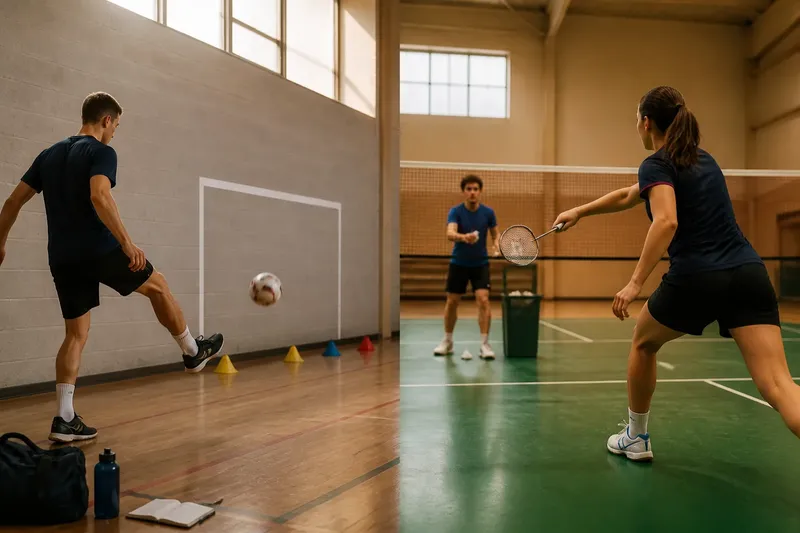
Solo drills or a practice partner? The right choice depends on what the skill asks you to do: repeat a stable movement, or respond to another person. A wall, a ball and a few clear targets can help with the first; a partner becomes valuable when timing, direction or decision-making changes with someone else’s actions.
That distinction matters in local club sport, where court time, pitch space and training partners may be limited. Rather than treating solo practice as a lesser version of team training, decide what the next repetition needs to teach, then choose the setting that can provide it.
Which skills suit solo practice?
Solo practice is well suited to movements whose starting conditions you can control and repeat. Examples include a tennis serve routine, a basketball free throw, a football first touch against a wall, or the basic shape of a swimming stroke practised under suitable supervision.
Repeating the same action lets you attend to one detail at a time: balance, grip, foot placement or the path of the ball. A wall, rebound net, marked spot, cones or a phone recording can provide a simple reference. Keep the target clear; if you are trying to change several things at once, it becomes harder to tell which adjustment helped.
Solo work also makes it easier to pause between attempts. You can reset a ball, make a note, and begin again without asking someone else to feed or retrieve it. That can be useful for learning the feel of a movement, but the repetition is only relevant if the action resembles the skill used in play.
When does a partner help?
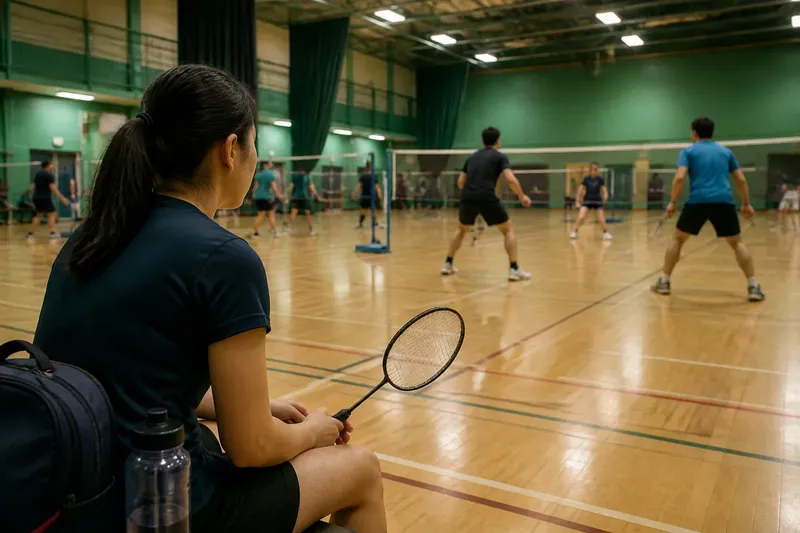
A partner helps when the skill depends on information that another player supplies. In badminton, a moving opponent changes where a shot should go; in football, a pass arrives at a changing pace and angle; in netball, a defender can alter the space available for a lead.
Partner practice can also build timing and communication. A player must notice a cue, choose a response and carry it out while the exchange continues. A ball machine or rebounder may provide repeated returns, but it cannot fully reproduce a partner’s choices, movement or signals.
Choose a partner who can keep the task useful rather than simply make it difficult. Agree on the purpose before beginning: one person might feed gentle, predictable balls while the other practises a controlled return. As the movement becomes familiar, the feeder can vary the direction or pace, provided both players can still maintain a safe and constructive exchange.
How should practice change?
Begin with the simplest version that lets you perform the skill with attention. If a player is learning a forehand, for instance, a stationary feed may help establish contact and balance. Later, a partner can send balls to different areas, asking the player to adjust position and recover for the next shot.
Change one demand at a time. Add movement, variation or a decision, but avoid making every repetition unpredictable from the outset. If the task becomes so hard that the player is mostly chasing, guessing or losing control, simplify the feed before adding more challenge.
Use brief pauses to name what you are noticing. “The ball is meeting the racket in front” is more useful than “That was better” because it points to an observable action. A partner can offer an outside view, but feedback should remain specific and respectful; the coach is the right person to consult when technique or persistent discomfort is a concern.
What if practice time is limited?
Use the available time for the part of the skill that needs the most attention, rather than trying to recreate a whole team session. If space is tight, a player might practise a controlled wall pass in a safe area, then use a club session for receiving under pressure. If a partner is available only briefly, save that time for an exchange that genuinely requires another person.
Say you play doubles badminton and often lift the shuttle too short when your partner is at the net. You might first practise a steady high lift alone with a racket and a suitable target area, focusing on a consistent contact point; at the next club session, ask a partner to vary the shuttle’s position so you practise choosing and reaching for the shot. The first task refines the repeated movement, while the second adds the changing cue that solo practice cannot supply.
Keep the arrangement practical for both people. Take turns feeding, retrieving or observing, and agree on how many repetitions each person wants before switching. If the facility is busy, check that your drill fits the available space and does not send equipment into another group’s area.
Which format fits your goal?
Use solo practice when you need a repeatable movement, a quiet chance to focus, or a task you can do without coordinating schedules. Choose a partner when success depends on a moving ball, an opponent’s position, a teammate’s call or a decision made in response to someone else.
Many skills need both formats, but not in equal measure at every stage. A useful session can move from controlled repetitions to a responsive exchange, then finish with the version of the skill you are likely to use in play. Keep the challenge manageable enough to notice what happens, and adjust the next repetition accordingly.
What do players ask?
Can solo drills replace team practice?
No: solo drills can improve a movement, but they cannot recreate communication, opposition or the changing choices of a game. Use them to prepare a specific skill, then practise that skill in the club setting where its cues and consequences appear.
How do I choose a useful practice partner?
Choose someone who can agree on a shared aim, give a suitable feed and take turns without turning every exchange into a contest. A partner need not be at the same level, but the task should be adjustable so both players remain involved.
What should I do when a drill feels too easy?
Add one meaningful demand, such as a different target, a moving start or a choice between two responses. Keep the original skill recognisable; if the added challenge changes the task entirely, it may no longer address the problem you meant to practise.
How can I tell whether a drill is helping?
Look for a clear, observable change tied to the aim, such as more consistent contact or a quicker response to a partner’s cue. If you cannot say what the drill is meant to improve, make the goal more specific before repeating it.
When deciding between solo drills or a practice partner, ask what information the skill needs: a stable target, or another person’s changing action. That question helps you use individual practice for focused repetition and shared practice for response, without expecting either format to do the other’s job.